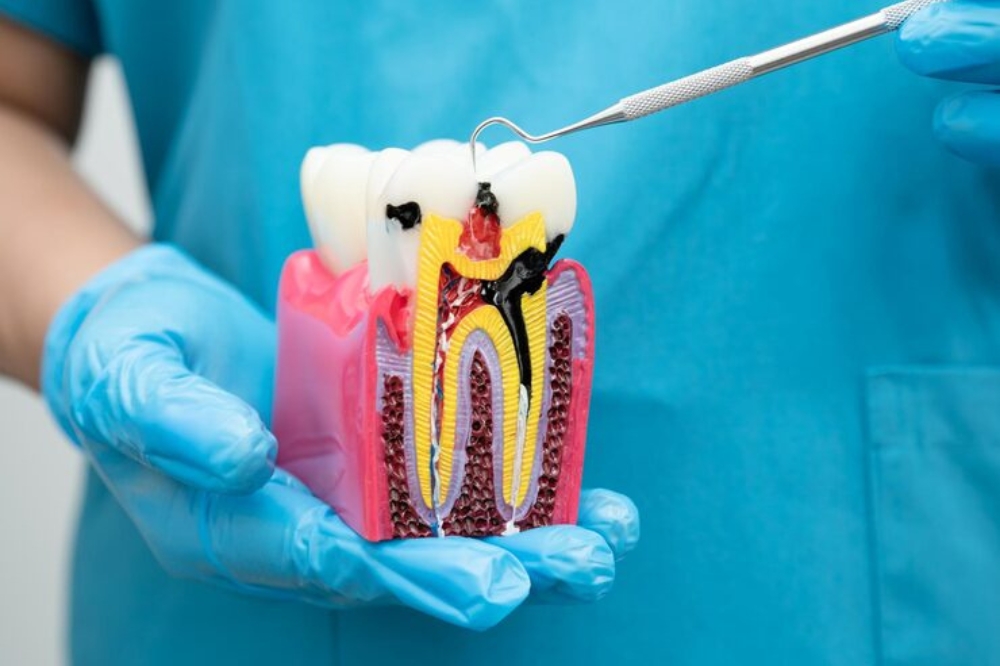
A cracked tooth can feel scary, but it does not always mean you will lose it. Modern dentistry has come a long way, and today there are several effective ways to treat a cracked tooth before it gets worse. If you are looking for cracked tooth treatment in Jacksonville, the most important thing you can do right now is act quickly. The sooner you get it checked, the better your chances of saving the tooth completely.
Why Do Teeth Crack in the First Place?
Teeth are strong, but they are not unbreakable.
Everyday habits and accidents can cause cracks that are sometimes invisible to the naked eye. Some cracks happen suddenly. Others develop slowly over many years without you even noticing.
Common reasons teeth crack include:
- Biting down on something very hard — like ice, hard candy, or popcorn kernels
- Grinding or clenching your teeth at night
- A hit or injury to the face or mouth
- A large old filling that weakens the tooth structure around it
- Sudden temperature changes — like eating something very hot, then very cold
If you have been feeling unexplained pain while chewing, it is worth visiting a dentist in Jacksonville who can take a close look and catch the problem early.
How Do You Know If Your Tooth Is Cracked?
This is where things get tricky—because not all cracks are easy to feel or see.
Some people feel sharp pain when biting down that disappears quickly. Others feel sensitivity to hot or cold that lingers longer than normal. Some people feel nothing at all until the crack gets worse.
Here are signs that should prompt you to see a dentist near you as soon as possible:
- Pain when chewing or releasing a bite
- Sensitivity to sweet, hot, or cold foods and drinks
- Swelling around a specific tooth
- On-and-off pain that is hard to pin down
- A tooth that feels slightly different when you run your tongue over it
Even if the pain comes and goes, do not ignore it. A crack that is caught early is far easier — and less expensive — to fix.
What Are the Different Types of Tooth Cracks?
Not all cracks are the same. The type of crack determines the treatment needed.
| Type of Crack | What It Means | Urgency Level |
| Craze lines | Tiny surface cracks in the enamel only | Low — usually cosmetic |
| Fractured cusp | A piece of the chewing surface breaks off | Moderate — needs attention |
| Cracked tooth | A crack runs from the surface toward the root | High — treat quickly |
| Split tooth | The tooth splits into two separate parts | Very high — immediate care needed |
| Vertical root fracture | The crack starts at the root and goes upward | Very high — often hard to detect |
Understanding what kind of crack you have helps your dentist choose the right treatment plan for you.
How Can Modern Dentistry Fix a Cracked Tooth?
This is where things get genuinely reassuring.
Today’s dental tools and techniques are far more advanced than they were even ten years ago. A good cracked tooth repair plan depends on how deep the crack is and where it sits in the tooth.
Here are the main treatment options available today:
- Dental bonding — A tooth-colored resin is applied to seal a minor crack. Quick, affordable, and effective for surface-level damage.
- Dental crown — A cap is placed over the entire tooth to hold it together and protect it from further cracking. Very common and long-lasting.
- Root canal treatment — If the crack has reached the inner pulp of the tooth, a root canal removes the damaged tissue and saves the tooth structure.
- Veneers — Thin porcelain shells placed over the front of a tooth. Great for cracks that affect appearance.
- Extraction — Only considered when the crack is too deep to repair. Your dentist will always try every option before recommending removal.
The right treatment depends entirely on your specific situation — which is why seeing a dentist for cracked tooth concerns sooner rather than later makes such a big difference.
Can a Cracked Tooth Heal on Its Own?
Unfortunately, no.
Unlike a broken bone, a tooth cannot repair itself. A crack will not close up or go away on its own. In fact, without treatment, it almost always gets worse over time.
Chewing puts pressure on the crack every single day. That pressure slowly pushes the crack deeper toward the root. What starts as a simple fix can turn into a root canal — or worse, a lost tooth — if left too long.
What Could Occur If A Split Tooth Is Not Treated?
Neglecting treatment of a cracked tooth is not a good idea. Over time, several things can happen:
- The crack deepens and reaches the nerve, causing severe pain
- Bacteria enter through the crack, leading to infection or abscess
- The tooth splits completely, making it impossible to save
- The nearby teeth and gum tissues got infected.
- The jawbone around the tooth begins to weaken
Getting cracked tooth treatment near you early prevents all of these outcomes. One simple appointment can save you from months of pain and much bigger dental bills later.
What Should You Do Right Now?
If you think you have a cracked tooth, here are simple steps to follow today:
- Do not ignore the pain—even if it comes and goes
- Avoid hard or crunchy foods until you see a dentist
- Do not chew on that side of your mouth
- Rinse gently with warm salt water to keep the area clean
- Book an appointment as soon as possible—time really does matter here
These small steps protect the tooth while you wait for your appointment.
Your Tooth Is Worth Saving
A cracked tooth is not something to push to the bottom of your to-do list. With the right care at the right time, most cracked teeth can be fully treated and go on to last for many more years.
At Jacksonville Endodontic Excellence, the team brings skill, experience, and genuine care to every patient who walks through the door. If you are dealing with tooth pain or sensitivity or suspect a crack, do not wait for it to get worse.
Contact us today and take the first step toward protecting your smile and your long-term dental health.
Frequently Asked Questions
Q1. Can a cracked tooth cause ear pain or headaches?
Yes — a deep crack can cause referred pain that spreads to the jaw, ear, or head area.
Q2. Is a cracked tooth always visible on an X-ray?
Not always — some cracks are too fine to show on X-rays and require special tests to detect.
Q3. How long does it take to treat a cracked tooth?
Most treatments are completed in one to two appointments, depending on the severity of the crack.
Q4. Can a crowned tooth still crack underneath?
Yes — the tooth structure under a crown can still crack, which is why regular check-ups remain important.