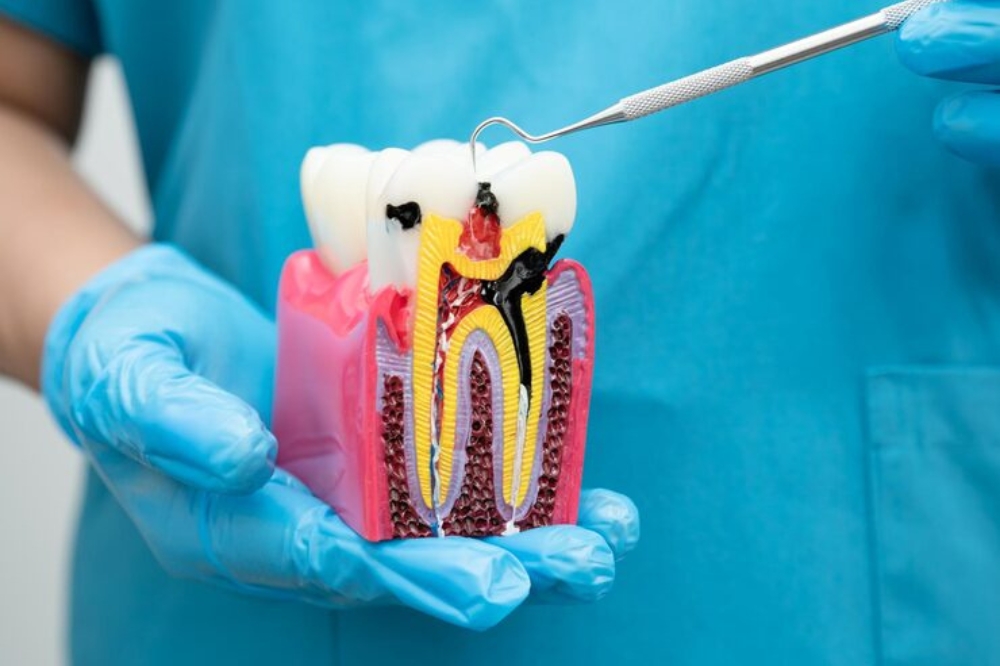

A root canal is meant to save your tooth, but sometimes it does not fully work. When that happens, you do not always have to lose the tooth. Endodontic retreatment in Jacksonville is a second-chance procedure that goes back in, clears out the problem, and gives your tooth a fresh start. The good news is that most teeth that have had a failed root canal can still be saved with the right care.
What Is Endodontic Retreatment?
Think of it as a do-over for your root canal. During your first root canal, the dentist removes infected tissue from inside your tooth and seals it. But sometimes that seal breaks down. Sometimes a tiny part of the infection was missed. Sometimes, new decay finds its way back in.
Endodontic retreatment opens the tooth again, removes any leftover or new infection, cleans everything thoroughly, and reseals it. The goal is the same as the first time — to save your natural tooth.
If you are unsure about your options, speaking with a dentist in Jacksonville who specializes in this area is the smartest first step you can take.
How Do You Know If Your Root Canal Has Failed?
Your body will usually give you signs. Most people notice something is wrong weeks, months, or even years after their original root canal.
Here are the most common root canal failure symptoms to watch for:
- Pain that comes back—You had relief after your root canal, but now the pain has returned
- Swelling around the tooth—Your gum or face near the treated tooth looks puffy
- Tenderness when biting—The tooth feels sore when you chew or press on it
- A pimple on the gum—A small bump near the tooth that may ooze
- Discoloration of the tooth—The tooth looks darker than it used to
- Loose feeling—The tooth does not feel as firm as it should
These are all signs that something is still not right inside the tooth. Do not ignore them.
What Does Failed Root Canal Pain Feel Like?
Failed root canal pain is different for everyone — but there are some common patterns.
Some people feel a dull, constant ache that never fully goes away. Others feel sharp pain only when biting down. Some people feel pressure deep in the jaw near the treated tooth.
What makes it confusing is that some failed root canals cause no pain at all. The infection quietly grows without you feeling it. That is why regular dental check-ups and X-rays are so important — they catch problems you cannot feel yet.
Why Do Root Canals Sometimes Fail?
Root canals are highly successful, but they are not perfect. Here are the most common reasons they can fail over time:
| Reason | Simple Explanation |
| Missed canals | Some teeth have extra root canals that were not found or treated |
| Incomplete sealing | A tiny gap in the seal allows bacteria back in |
| New decay | A cavity forms after treatment and reinfects the tooth |
| Cracked tooth | A crack lets bacteria reach the inner tooth |
| Delayed crown placement | Waiting too long for a crown leaves the tooth exposed |
Understanding why it failed helps your dentist fix it properly the second time.
What Happens During the Retreatment Procedure?
The process is straightforward and similar to your first root canal.
Here is what to expect step by step:
- Step 1—Your dentist takes X-rays to see exactly what is happening inside the tooth
- Step 2—Local anesthesia is given so you stay completely comfortable
- Step 3—The old filling material inside the tooth is carefully removed
- Step 4 — The canals are cleaned, shaped, and checked for missed areas
- Step 5 — The tooth is refilled and sealed properly
- Step 6 — A crown is usually placed afterward to protect the tooth long-term
Most patients are surprised by how manageable the procedure feels. Modern techniques and tools make it far more comfortable than people expect.
Is Retreatment Always Possible?
In most cases — yes. But not always.
Sometimes the tooth structure is too damaged, or the infection has spread too far. In those situations, your dentist may discuss other options like surgical endodontic treatment or, if necessary, extraction with a replacement option.
Searching for endodontic retreatment near you and seeing a specialist early gives you the best possible chance of saving the tooth. Waiting too long can make things harder to fix.
How Long Does Recovery Take?
Recovery is usually quick and manageable.
Most people feel mild soreness for two to three days after the procedure. Over-the-counter pain relievers are usually enough to stay comfortable. You can return to normal activities the very next day in most cases.
Your dentist near you will give you clear aftercare instructions and schedule a follow-up to make sure everything is healing well.
Your Tooth Still Has a Fighting Chance
A failed root canal is frustrating — but it is not the end of the road for your tooth. With the right specialist and the right timing, retreatment can give your tooth many more years of healthy function.
At Jacksonville Endodontic Excellence, the team is dedicated to saving teeth that others may have given up on. If you are experiencing pain, swelling, or any sign that something is not right with a previously treated tooth, do not wait.
Reach out to us today and find out whether retreatment is the right step for you. Your natural tooth is worth fighting for.
Frequently Asked Questions
Q1. Is endodontic retreatment more painful than the first root canal?
Most patients find retreatment just as comfortable as the first procedure, thanks to modern anesthesia.
Q2. How soon after a failed root canal should retreatment be done?
The sooner the better — early treatment gives the tooth the best chance of being saved.
Q3. Will my insurance cover endodontic retreatment?
Many dental insurance plans do cover retreatment — check with your provider for specific details.
Q4. What happens if retreatment does not work either?
If retreatment is not successful, your dentist may recommend endodontic surgery or discuss other tooth replacement options.